Complexity: Theory & Practice
Feb 15, 2011 16:00
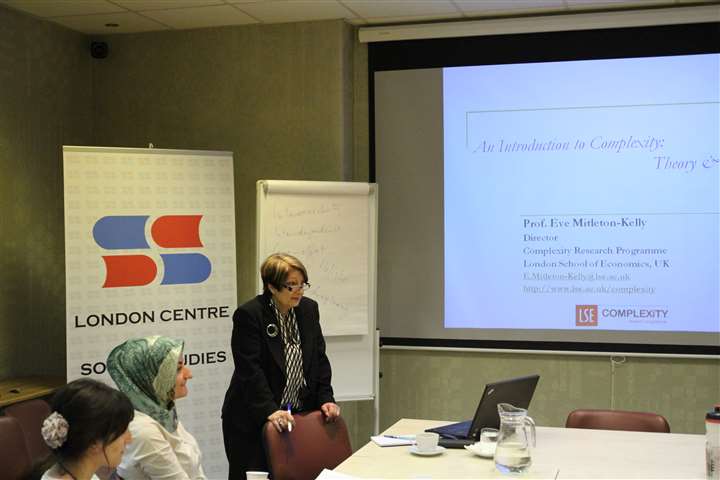
Prof Eve Mitleton-Kelly
Complexity: Theory & Practice
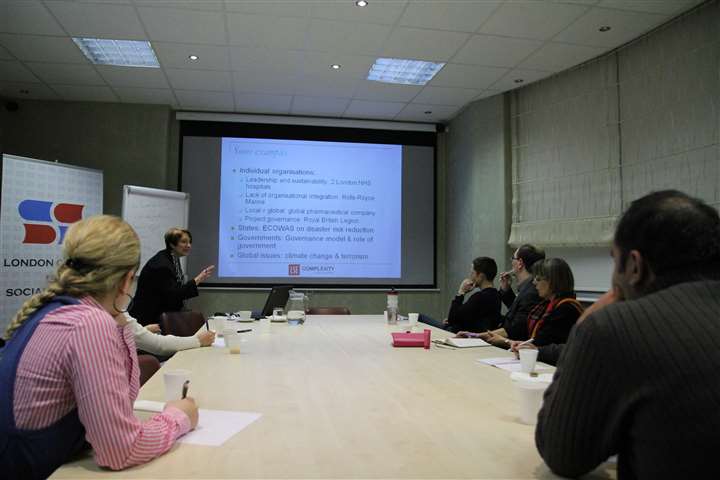
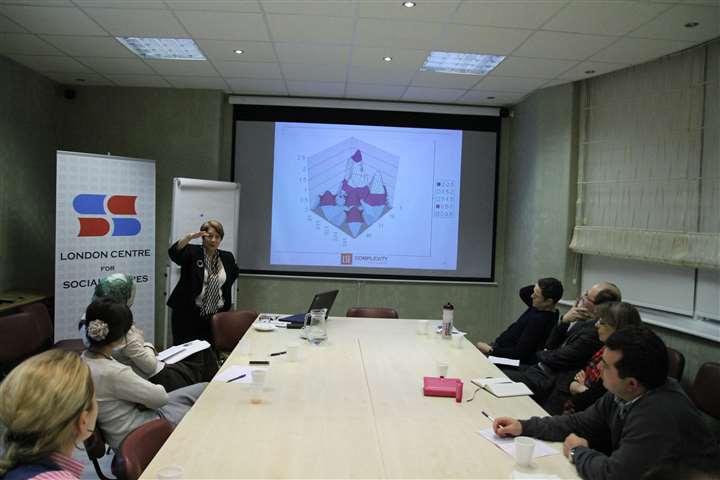
Complex social problems appear intractable because they are often approached in a linear and simplistic way. Although such problems are multi-dimensional, the favoured approach and solution, in most organisations, is frequently mono-dimensional focusing on one aspect of the problem such as finance or IT or restructuring. It is therefore not surprising that the ‘solution’ does not work. The talk will introduce a different approach based on complexity theory and will introduce some key principles of the theory and explain how they apply to human systems. Although the seminar will start with the theory, it will also illustrate the application of the theory to very practical real-world problems and will discuss some of the methods used to identify the problem space; with that understanding organisations are then able to co-create ‘enabling environments’ that effectively and sustainably address (although may not solve) the apparently intractable problem.
The Complexity Group:
The Group has been working for over 15 years, with organisations in the private and public sectors including AstraZeneca, BT, BAe Systems, Cabinet Office, Citibank (New York & London), Defra (Dept for Environment, Food & Rural Affairs), DWP (Dept for Work and Pensions), Dutch Ministry of the Interior, ECOWAS (Economic Community of West African States) Commission, European Commission, GlaxoSmithKline, Health & Safety Executive, the Humberside TEC, Legal & General, Ministry of Defence, Mondragon Cooperative Corporation (Basque Country), the National Health Service, Norwich Union Life, Rolls-Royce (Aerospace & Marine), Royal British Legion, Shell (International, Finance & Shell Internet Works), Suffolk County Council, the World Bank (Washington DC) and several companies in the aerospace industry, to address practical complex problems. In the process it has developed a theory of complex social systems and an integrated methodology using both qualitative and quantitative tools and methods. The work of the LSE Complexity Group is at www.lse.ac.uk/complexity
Venue
London Centre for Social Studies (LCSS)
Address: 73 Watling Street London EC4M 9BJ