
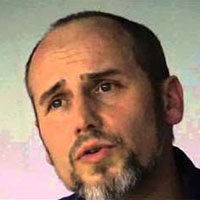
Dr Sevket Hylton Akyildiz
Post-Doctoral Research Associate, School of Oriental and African Studies (SOAS)
Independent Researcher 2014-2016
- Post-Doctoral Research Associate — 2012-2014 (SOAS, University of London). A study of social and cultural change in twenty-first century southern England in the context of British Muslims living in non-city urbanised environments and the response of various parties. My methodology is participant observation and unstructured and semi-structured interviews. I will interview a cohort of 40 interviewees. Furthermore, I will examine local government documents and newspapers. The case study is the numerically small and ethnically heterogeneous British Muslim community at East Sussex, England, with special reference to coastal small town(s). My overall research is an alternative analysis to the notions of city based, ‘ghetto’ mentalities supposedly held by large ethic communities and their communal resistance to social integration into British mainstream society. Aims: In contrast, I will highlight and provide evidence of the generally successful social integration of minority Muslim communities into the British civic sphere. In respect of this, my research themes cover the following: (i) the institutionalisation of mosques in small town England, (ii) local Muslim community needs and want, internal community politics, and inter-communal relations (iii) the evolving nature of British citizenship, trust/distrust issues and (iv) the affect of social and cultural change on the local non-Muslim community and their responses. The theoretical framework looks at multiculturalism, existing British state-church/mosque relations and work by Ash Amin.
- Teaching Fellow SOAS, University of London
- Ph.D. completed 2011 SOAS, University of London
- An in-depth history of ideas, intellectual history study of Soviet enculturation and acculturation in Muslim Central Asia. My methodology was library based, using English language Cold War texts and literature which cover and Marxist-Leninist primary sources. My research explained (1) the core Soviet socialisation channels: schools, colleges, trade schools, universities, sport and leisure institutions, public ceremony, mass mobilisation and ritual, and the youth movements of Soviet Central Asia: the Pioneers and the Komsomol, (2) the building of the collective ‘socialist people’ with a shared ideological consciousness – commonly and mistakenly known in the West as the ‘Soviet Man’, (3) the affect of Gorbachev’s perestroika restructuring and glasnost openness policies on education and the preparation of young people for the adult world in Central Asia, (4) the significance of civic values and norms within an authoritarian education system – with the aim to create a common outlook amidst 100 plus different ethnic-cultural Soviet nations and peoples. My PhD was entirely self-funded, and I balanced my research with paid employment. The case study was Uzbekistan, the Muslim majority country with the largest population in Central Asia. And with an intellectual focus upon social issues, theory and education. The time period was 1924-1991 CE, with particular focus upon the 1980s. The theoretical framework used is R.M. Smith’s Stories of Peoplehood: The Politics and Morals of Political Membership
- MA Middle Eastern Studies (SOAS, University of London) Major in Central Asia 1850-2000 CE.
- BA (Hons) – Political Philosophy & European History (Kingston University)
- BSc (Econ) – Information & Library Studies (Aberystwyth, University of Wales)